
Huge Data Centre Proposed on Green Belt Near Orpington
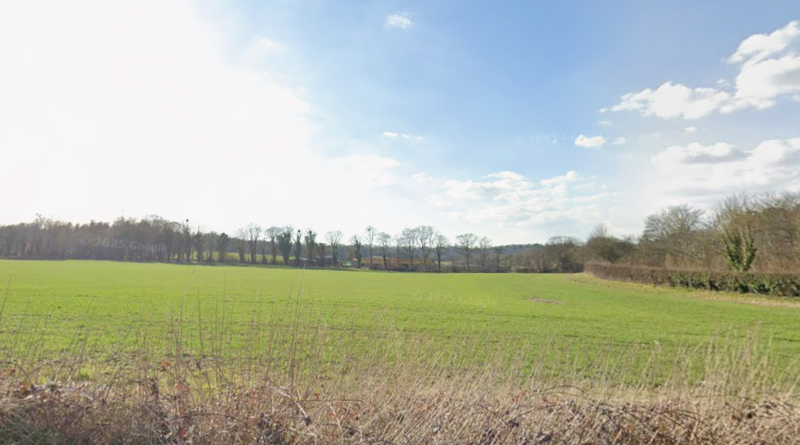
Plans for a huge new data centre on Green Belt land near Orpington have attracted hundreds of objections from local residents concerned about the scale of the development and its potential impact on the surrounding countryside.
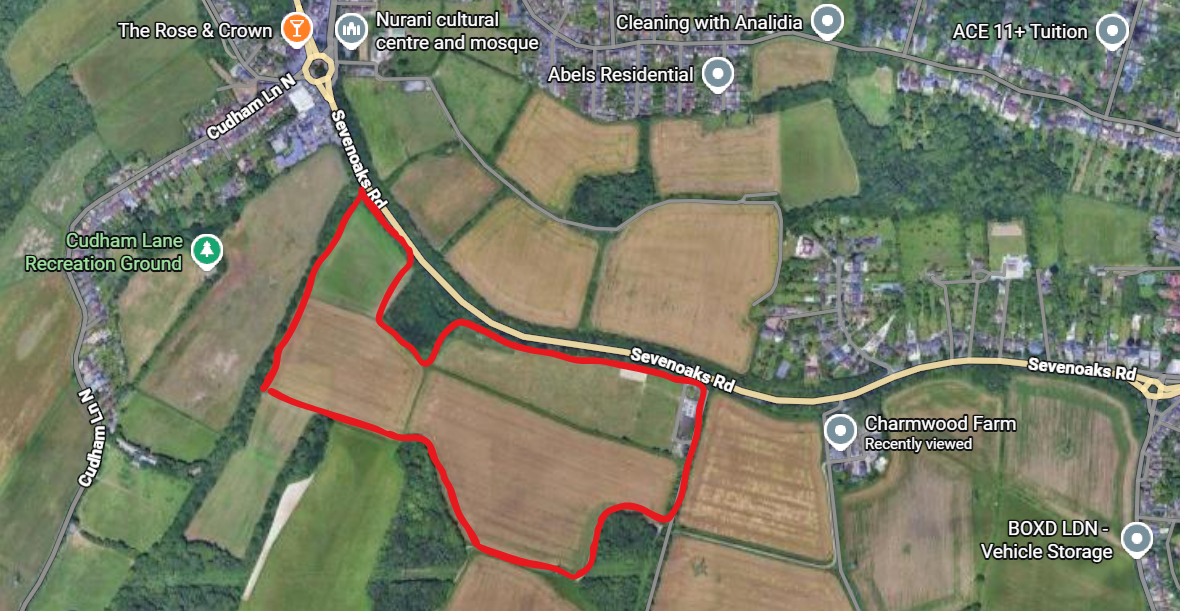
The proposals from DARE DC would see a large data centre campus constructed at Charmwood Farm, off Charmwood Lane, south of the A21 Sevenoaks Road between Green Street Green and Pratts Bottom.
The site covers around 10 hectares of Green Belt land and is currently predominantly undeveloped agricultural land.
Although a full planning application has not yet been submitted, the scale of the proposals has already prompted considerable concern locally.
What is being proposed?
Initial proposals outline a data centre development of around 15,000 square metres, with buildings approximately 20 metres high and capacity of up to 50 megawatts.
The plans also include electrical and cooling infrastructure, offices, parking and internal roads.
Perhaps most strikingly, the proposals include a standby energy compound containing 16 diesel generators, capable of providing backup power to the facility.
DARE DC says data centres are increasingly necessary to store and process the enormous quantities of information required by our increasingly digital lives, with demand expected to grow further through the rapid development of artificial intelligence.
There is little doubt that Britain will need more digital infrastructure.
The question for Orpington residents is whether Green Belt countryside is the right place to put it.
Hundreds of objections
More than 300 comments, predominantly negative, had already been submitted in response to the proposals by late July, despite the project not yet having reached the full planning application stage.
Concerns raised locally include the loss of Green Belt and agricultural land, the enormous scale of the proposed buildings, electricity and water requirements, additional traffic, noise and the potential impact on wildlife.
The location is particularly sensitive.
Around five hectares of the site have been identified as Grade 3a agricultural land, categorised as among the “best and most versatile” agricultural land.
The site also borders the Norsted Valley Woods Site of Importance for Nature Conservation, while Downe Bank and High Elms Site of Special Scientific Interest lies around 500 metres away.
Concerns have therefore been raised about potential habitat loss, disturbance, increased lighting and changes to wildlife routes.
Heritage and archaeology concerns
The environmental issues go further.
Two Grade II listed buildings are located within approximately 200 metres of the proposed site, creating questions about how a major industrial-scale development could affect their setting.
The site also falls within the Bromley Downs Tier III Archaeological Priority Area, meaning further archaeological investigation could be necessary.
Transport will also need to be considered carefully.
While the site is close to the A21 Sevenoaks Road, surrounding routes include much narrower rural roads that were never designed with a development of this scale in mind.
Full environmental assessment required
Bromley Council has now determined that the proposed development must undergo a full Environmental Impact Assessment before any future planning application can be properly considered.
The council concluded that, given the location, scale and characteristics of the proposal, it was likely to result in significant environmental effects.
This is important, but it does not mean the data centre has either been approved or refused.
At this stage, there is no full planning application for the council to determine.
DARE DC would need to submit considerably more detailed information examining the environmental consequences of the development as part of the next stage of the process.
The developer is currently targeting a grid connection in 2028.
Reform Orpington: Protect our Green Belt
Reform Orpington recognises that data centres and digital infrastructure will become increasingly important as technology and artificial intelligence continue to develop.
But once again, local people are being asked to contemplate sacrificing Green Belt land to accommodate development.
We do not believe protecting the Green Belt means opposing progress or opposing every development.
It means asking a very simple question:
Have all reasonable alternatives on previously developed and brownfield land been exhausted before we build on countryside that was deliberately protected from development?
For a facility of this enormous scale, with substantial electricity requirements and potential impacts on agriculture, wildlife, landscape and neighbouring communities, that question deserves a convincing answer.
More than 300 responses before a full planning application has even been submitted demonstrate the strength of local concern.
Reform Orpington will be following the proposals closely as they progress through the planning system.
Our Green Belt should not simply become the default location whenever somebody needs somewhere to build.