

Reform’s First 100 Days: Deliver – Or Step Aside
Reform UK has concluded its National Conference in Birmingham with a simple message about what would happen if the party wins the next General Election:
For Reform supporters, Birmingham offered something that has been missing from British politics for far too long: clear promises, clear deadlines and clear accountability.
The announcements made during The First 100 Days conference were ambitious. Lower taxes for working people, cheaper household energy, more opportunities to train British doctors and nurses, action on illegal Channel crossings and substantial reductions in government spending.
But perhaps the most exciting idea was even simpler.
If Reform’s ministers don’t deliver what they have promised within their first 100 days, they have pledged to step aside.
At Reform UK Orpington, we welcome that commitment to accountability. Politics has suffered enormously from promises being made before elections only to be abandoned, delayed or diluted afterwards. The jeopardy pledge is Reform’s proposed answer: put the commitment in writing and accept the consequences if you fail to deliver it.
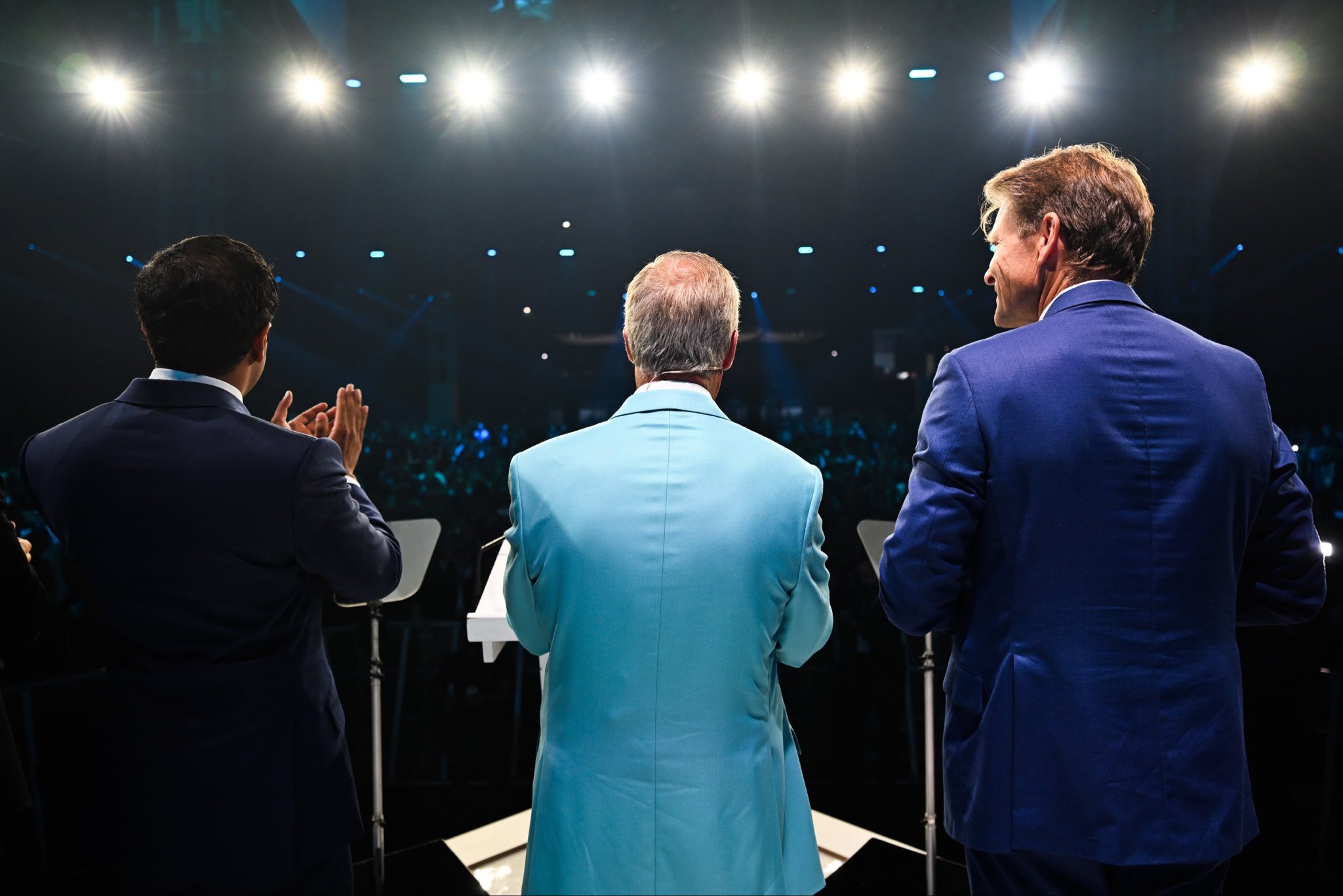
100 Days – And Ministers Put Their Jobs On The Line
One of the most striking announcements from Birmingham was not an individual policy at all.
It was the way Reform intends to hold its own ministers accountable.
Farage says every senior minister in his government would make a specific, written 100-day pledge.
These would not simply be aspirations buried within a manifesto.
They would be signed commitments.
If a minister fails to implement the change they have promised within the first 100 days, they would be expected to resign. Farage says that if they refused, they would be sacked.
We have already seen what that means in practice.
Richard Tice and Robert Jenrick have published signed letters setting out their commitments – and offering their resignations if they fail to deliver them.
The principle behind the policy is straightforward:
Make the promise. Put it in writing. Deliver it – or step aside.
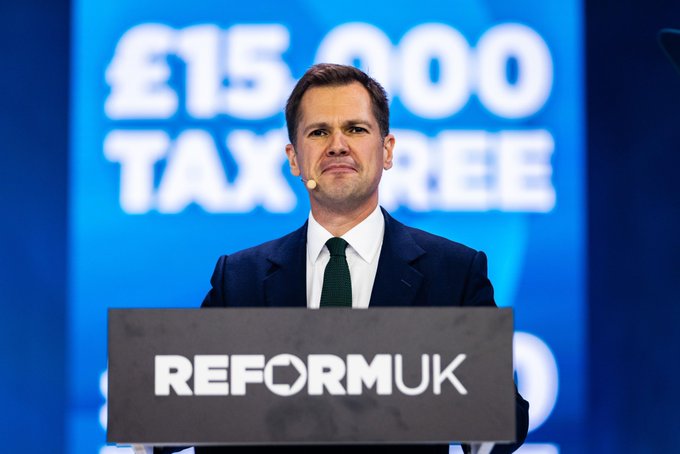
Robert Jenrick: Raise the Personal Allowance to £15,000
One of the biggest announcements concerns the amount people can earn before paying Income Tax.
Robert Jenrick has pledged that his first Budget as Chancellor would increase the tax-free Personal Allowance from its current £12,570 to:
£15,000
That Budget would be called within Reform’s first 100 days.
Reform estimates the change would cut taxes for around 40 million people and remove approximately 2.9 million people from Income Tax altogether.
For a basic-rate taxpayer, the increase would be worth around £486 a year, while Reform says an average working couple could be almost £1,000 a year better off.
It would also be designed to prevent the State Pension being dragged into Income Tax as pension incomes increase.
Jenrick has put his position on the line.
In his signed commitment to Farage, he states that if he does not deliver the £15,000 Personal Allowance:
he should not remain Chancellor.
Richard Tice: Cut Household Energy Bills by £250
Richard Tice has made an equally clear commitment on energy.
His 100-day pledge is to reduce the average annual household energy bill by £250.
Reform says it would achieve the reduction through measures including permanently removing VAT from domestic energy bills and cutting carbon and other policy-related costs currently included within bills.
The policy forms part of Reform’s wider opposition to existing Net Zero policies, which the party argues have increased costs for households and damaged British industry.
Again, Tice has signed his commitment.
If the £250 reduction is not delivered within Reform’s first 100 days, his letter asks Farage to treat it as his resignation.
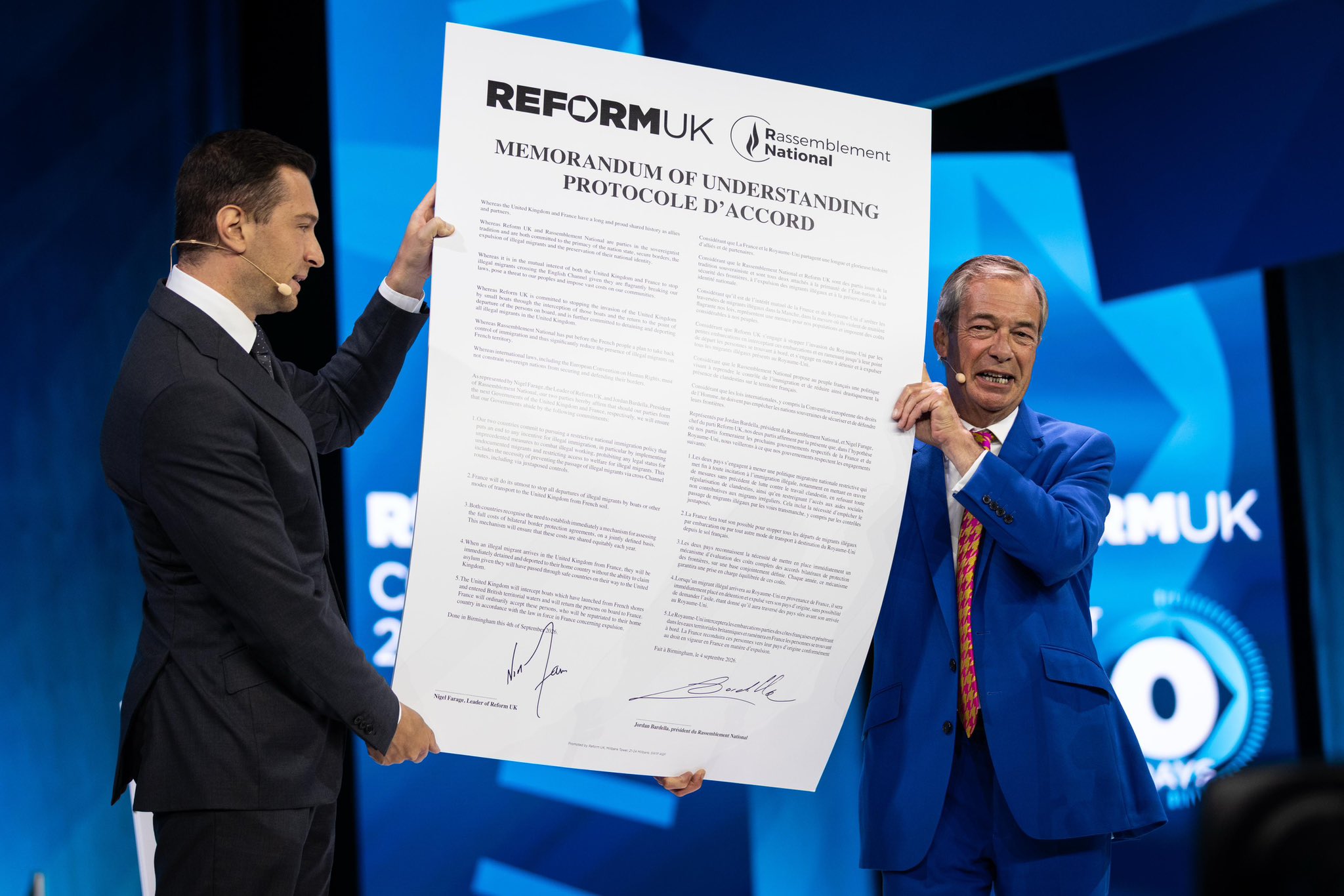
Nigel Farage: Stop the Boats Within 100 Days
Perhaps the most dramatic moment of the Birmingham conference came when Nigel Farage and Jordan Bardella, President of France’s National Rally, signed an agreement live on the main stage.
Farage described it as a “genuine new entente cordiale” between the two parties and countries, designed to tackle illegal Channel crossings from both sides.
The Memorandum of Understanding commits a future National Rally-led French government to accepting the return of migrants who launch from French shores, enter British territorial waters and are intercepted and returned to France.
For Reform, that agreement is a significant component of its commitment to stop the small boats within the first 100 days of government.
Operation Fortress
The agreement would support Reform’s proposed Operation Fortress.
Under the proposal, the Royal Navy and Royal Marines would intercept small boats attempting to cross the Channel, remove those on board and return them to France.
One of the obvious difficulties with any returns policy has been whether France would agree to take those migrants back.
The agreement signed in Birmingham provides a potential answer – although its implementation would depend on both Reform forming a UK government and National Rally taking power in France.
Bardella told delegates that if the French people elect National Rally in 2027, his government would ensure that:
“France is no longer the gateway for illegal immigration into the United Kingdom.”
His argument was that people entering France illegally should not then be able to use the country as a route towards Britain.
Bardella said the Channel must cease being a migration route towards Dover and Folkestone and called for Britain and France to work together to break the people-smuggling business model.
He also said a National Rally government would seek to return illegal migrants to their countries of origin.
A New Relationship Across the Channel
For Farage, the significance of the agreement goes beyond cooperation between two political parties.
Successive British governments have struggled to secure the level of French cooperation necessary to prevent small boats reaching the UK.
Reform believes a future National Rally government could fundamentally change that relationship.
Farage told conference that the agreement demonstrated a shared determination between Reform and National Rally to restore control over their respective borders.
Shadow Home Secretary Zia Yusuf had already announced Reform’s commitment to stop the boats during its first 100 days.
Farage then put his own authority behind that promise during his keynote address:
“We will stop the boats within the first 100 days of government.”
Of all the deadlines established in Birmingham, it could ultimately prove one of the clearest tests of Reform’s 100-day philosophy.
If Reform forms the next government, the party is asking voters to judge it on a very simple outcome: have the boats stopped?

Suella Braverman: More British Doctors and Nurses
Education spokesperson Suella Braverman also unveiled significant changes covering universities and NHS training.
Among the proposals are plans to remove the cap on medical school places, allowing more British students with the required grades to train as doctors.
Reform argues that Britain currently turns away capable applicants from medical schools while subsequently recruiting significant numbers of doctors trained overseas.
Braverman has also pledged to introduce 0% interest student loans for nursing students.
Another commitment would reduce overall student-loan issuance by 20 per cent, reflecting Reform’s view that too many young people are being encouraged towards university when vocational and other routes may offer better alternatives.
Her wider education speech also included a greater emphasis on patriotism in schools, including a proposal that schools should fly the Union Flag and that pupils should be taught about the positive aspects of British history.
Cutting Government Spending
Reform argues that its tax reductions and other commitments must be accompanied by major reductions in government expenditure.
Jenrick used Birmingham to discuss plans to find around £80 billion in government spending savings, while Farage subsequently set out Reform’s broader financial calculations.
The new commitments announced at conference would cost approximately £28 billion by the fifth year of a Reform government.
Combined with previously announced policies costing around £30 billion, Reform puts the total at approximately:
£58 billion
The party says it has identified approximately £91 billion in savings and additional revenues to fund its programme.
Those figures will inevitably face detailed scrutiny as Reform develops its programme for government ahead of the next election.
But the message from Birmingham was that tax cuts would be accompanied by a substantially smaller and less expensive state rather than funded simply through additional borrowing.
But Can All This Really Be Done in 100 Days?
It is the obvious question – and one Farage addressed directly.
His answer is that a Reform government would operate very differently from its predecessors from its first day in office.
Farage says he would declare a national emergency and immediately recall Parliament, cancelling parliamentary recesses where necessary.
MPs could be required to sit six days a week – and for extended hours – to pass the legislation required to implement Reform’s programme.
Farage also addressed what would happen if Reform encountered resistance elsewhere within the British establishment.
He said he would expect the House of Lords to respect the mandate given to an elected government. If necessary, however, he raised the possibility of appointing additional peers or ultimately holding a referendum over the future composition of the Lords.
Reform also intends to leave the European Convention on Human Rights, while Farage stressed his view that Parliament must remain responsible for making Britain’s laws.
And his message to the Civil Service was equally clear: officials would be expected to implement the programme of an elected Reform government, with Farage saying those deliberately obstructing it could be replaced.
It is an extraordinarily ambitious timetable but governments too often explain why change cannot happen.
Reform intends to begin with the opposite question:
What needs to be done to make it happen?
Conference Was Not Without Controversy
The three days in Birmingham were not entirely dominated by policy.
An undercover Channel 4 investigation raised questions about discussions involving two Reform figures and political donations.
The allegations are serious and will be properly investigated. The two individuals involved have stepped aside from their roles pending that process, while Reform has denied that illegal donations were accepted.
However, it should be noted that the fact that Channel Four chose to air this programme on the eve of the main part of the Conference was another clear act of war from an establishment body against Reform.
Farage’s Friday speech was also interrupted on several occasions by protesters inside the conference hall.
The disruptions briefly halted proceedings but did little to alter the central focus of the weekend as Reform continued to set out its programme.

Government in Waiting
Perhaps the biggest message from Birmingham was therefore broader than any individual policy.
Reform is attempting to demonstrate that it is preparing not simply to influence the next government, but to be the next government.
That means explaining what would happen after election night.
Who would do what?
How quickly would they do it?
How would it be paid for?
And what happens if they fail?
The First 100 Days was Reform’s attempt to start answering those questions.
There will be plenty of debate between now and the next General Election about whether every proposal is achievable and whether the figures add up.
But Reform has now begun putting specific promises, deadlines and names before the electorate.
For those ministers entrusted with delivering them, Farage’s message from Birmingham could hardly have been clearer:
100 days. Deliver your promise – or lose your job.
And for voters, Reform’s message is equally straightforward: after years in which trust in political promises has been badly damaged, this represents a different approach to accountability. Make the promise. Put it in writing. Deliver it – or step aside.
From Birmingham to Orpington
For those of us at Reform UK Orpington, the most encouraging message to emerge from Birmingham wasn’t simply one policy or one speech.
It was the determination to get things done.
Nobody can realistically repair every problem facing Britain in 100 days, something Nigel Farage himself acknowledged. But a government can show within those first 100 days what kind of government it intends to be.
Reform has now put forward ambitious commitments on tax, energy, immigration, education and the NHS. Just as importantly, the people expected to deliver them are being asked to put their own jobs on the line.
That is an approach to political accountability that we at Reform UK Orpington are delighted to see.
Make the promise. Put it in writing. Deliver it – or step aside.
From Birmingham to Orpington, the message could hardly be clearer.
The pledges have been made. The Promises are clear. The clock will start ticking on day one.
Let’s have an election. Let’s get Reform in. Let’s save the country.