
The Walnuts: Regeneration Yes – But 19 Storeys is too much for Orpington
For years, the future of the Walnuts Shopping Centre has been one of the biggest talking points in Orpington.
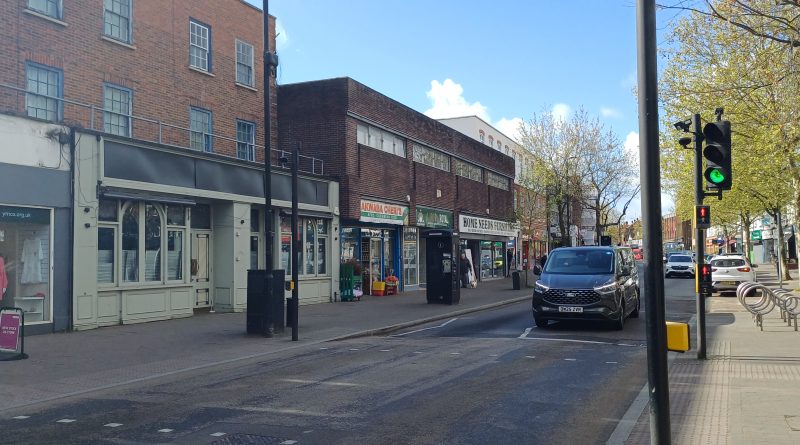
Few would argue that the area does not need investment. Parts of the shopping centre are tired, units have stood empty and the northern end of Orpington High Street has struggled compared with other parts of the town centre.
Indeed, Bromley Council’s own Retail and Leisure Study found that the northern half of Orpington town centre performs noticeably less well, with higher vacancy levels, poorer-quality property, lower footfall and a less attractive overall offer. The same study concluded that redevelopment which increases town-centre footfall could help improve its vitality.
So the argument shouldn’t simply be about whether the Walnuts should be redeveloped.
It should be about what kind of redevelopment is right for Orpington.
And after years of ambitious plans, public opposition, redesigns and delays, that question is becoming increasingly important.
From 990 Homes to 440
The scale of the original proposals explains why the redevelopment became so controversial.
A planning application submitted in December 2021 proposed demolishing the Walnuts Shopping Centre and creating 990 flats across 15 blocks, with two buildings reaching 20 storeys.
The proposals also included demolition of the Walnuts Leisure Centre and Saxon Day Centre.
The plans generated considerable local opposition.
The Nuts To The Walnuts campaign group says approximately 3,700 objections were submitted, accounting for 96 per cent of comments on the application.
The application was eventually withdrawn in October 2022.
That wasn’t the end of the Walnuts story.
Redcliff Returns With New Proposals
Redcliff Cap subsequently took forward plans for the shopping centre site and began another consultation process in 2023.
Early proposals involved at least 500 homes and three buildings reaching around 15 storeys.
Consultation then stalled while discussions took place concerning the leasehold/freehold arrangements at the Walnuts, before Redcliff returned with revised proposals in March 2025.
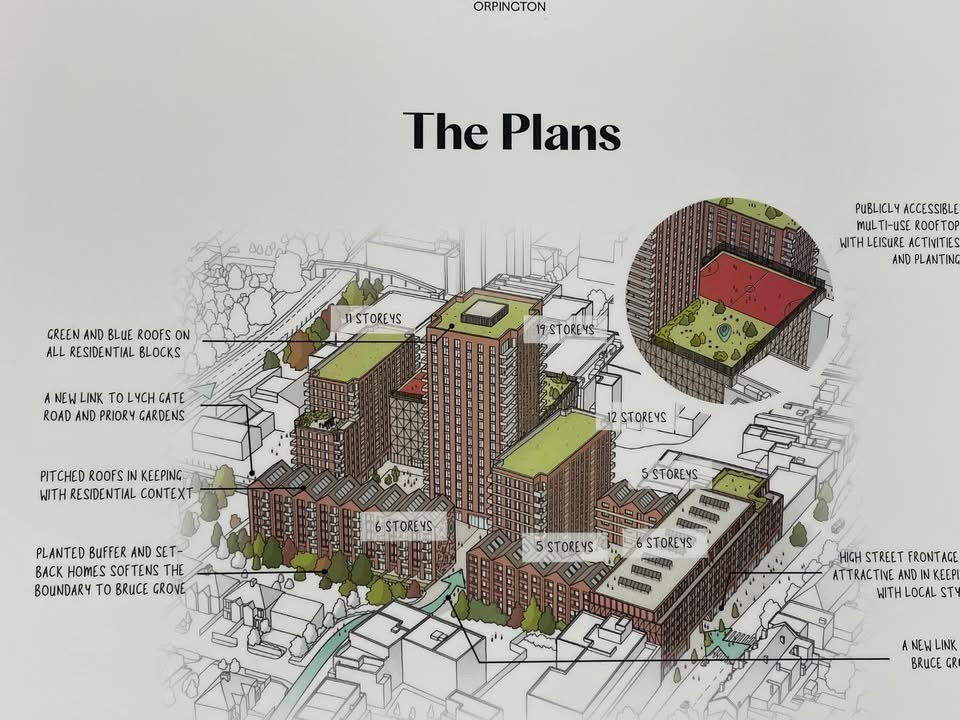
Those plans reduced the number of homes again, to approximately 450, but included buildings ranging between 11 and 19 storeys.
The proposals included a single taller building towards the centre of the development, with heights stepping down towards the edges.
Alongside the homes were proposals for new shops, an indoor market, landscaped areas, wider public streets, cultural and community space and leisure and green space above part of the car park.
There was, therefore, considerably more to the scheme than simply building hundreds of flats.
But concerns remained.
19 Storeys in Orpington?
Perhaps the most obvious issue is height.
The revised scheme was substantially different from the original 990-home proposal, and reducing the overall number of homes was a welcome move.
But a 19-storey building would still represent a significant change to the Orpington skyline.
This is ultimately a question about what kind of town centre Orpington should become.
Higher-density development is inevitably going to form part of London’s future housing supply, particularly around established town centres and transport links.
There is also a strong argument for building homes on previously developed town-centre land rather than continually looking towards the Green Belt.
But accepting the principle of new housing does not mean accepting development at any height or density.
Regeneration should enhance Orpington, not overwhelm it.
What About Parking?
Parking is another major concern.
The March 2025 proposals would have reduced parking at the Walnuts from approximately 525 spaces to 370 — a reduction of 155 spaces, or almost 30 per cent — while simultaneously introducing hundreds of new homes.
There is an argument that people choosing to live in a town-centre development should be less dependent on cars, with shops, buses and Orpington railway station nearby.
But the Walnuts car park does not exist solely for future residents.
It is also used by people coming into Orpington to shop, eat, use local services and visit the town centre.
If regeneration is supposed to help the High Street, it is reasonable to ask whether making it more difficult for some existing customers to visit would work against that objective.
Parking therefore needs to be considered as part of the wider future of Orpington — not simply as a calculation of how many spaces a residential development technically requires.
The High Street Cannot Remain in Limbo
There is another side to this debate which shouldn’t be ignored.
Doing nothing isn’t working either.
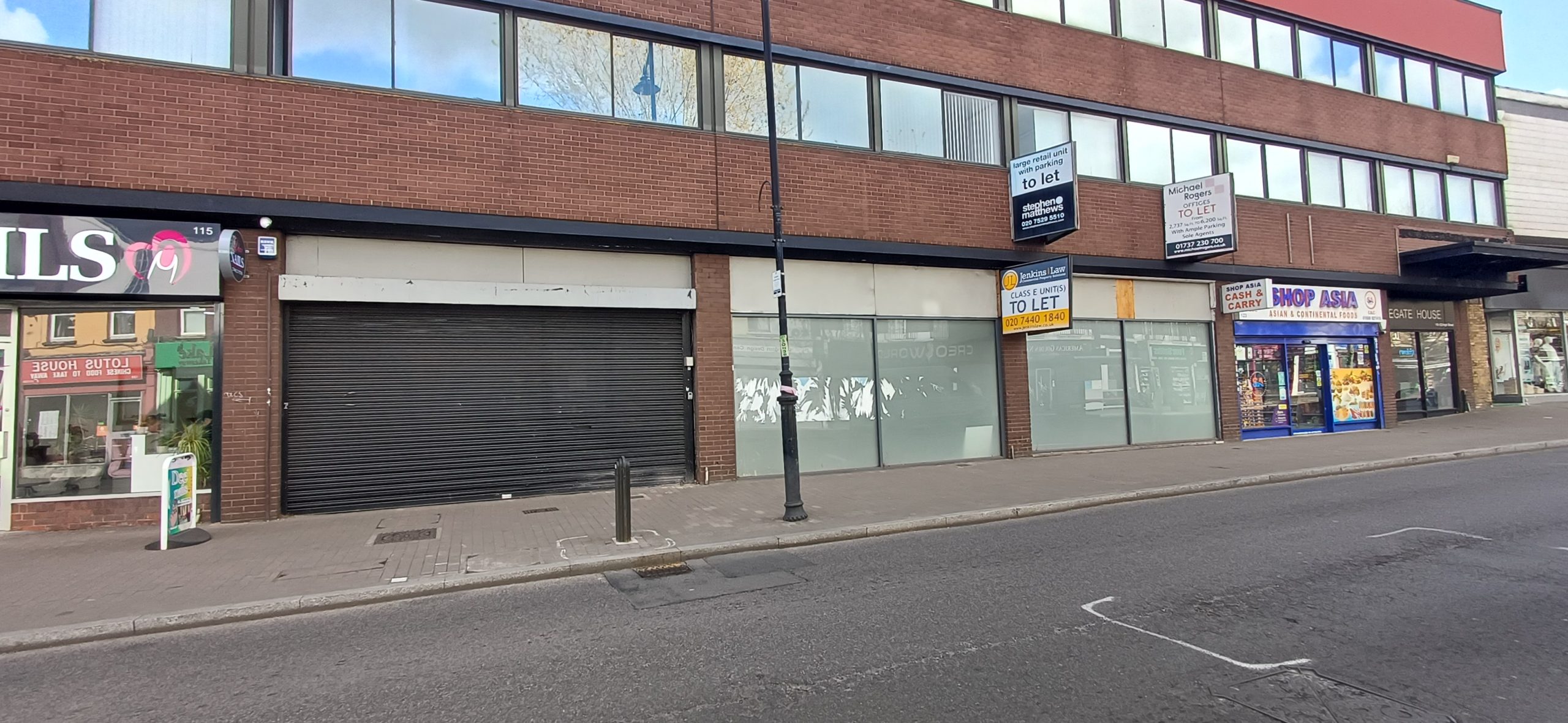
Years of uncertainty over the future of the Walnuts have coincided with empty and boarded-up units around the redevelopment area.
Bromley Council’s independent Retail and Leisure Study recorded seven vacant units being marketed within the Walnuts itself and described Orpington’s vacancy levels as relatively high for a centre of its size. It concluded that Orpington’s retail and leisure offer was doing reasonably well but “could do better”, and identified increased footfall through redevelopment as one potential way of improving vibrancy.
Hundreds of additional people living within walking distance of Orpington High Street could provide additional customers for shops, cafés, restaurants and other local businesses.
Good redevelopment could help breathe new life into this part of the town.
The question is whether we can achieve that without overdeveloping it in the process.
£10 Million Brings the Project Back Into Focus
The Walnuts returned to the spotlight this summer with a significant announcement from the government-backed National Housing Bank.
On 9 July 2026, the Bank announced a £10 million infrastructure loan to Tikehau Capital to support redevelopment of the Walnuts Shopping Centre.
The official announcement specifically refers to the creation of 440 homes and describes the scheme as a key regeneration project for Orpington town centre.
The Walnuts loan forms part of £35 million of financing announced for regeneration and housing projects in Bromley, Salford and Ludlow.
That announcement is significant — but it does not mean a 440-home development has simply been given planning permission.
What Does the £10m Actually Mean?
Following the announcement, Nuts To The Walnuts campaigner Steve Wehrle sought clarification from local representatives about what the funding meant.
In correspondence subsequently published by the campaign group, Orpington MP Gareth Bacon said his understanding was that National Housing Bank infrastructure loans could support pre-planning activity designed to help de-risk a project.
He also said the loan was subject to phased milestones rather than simply being a £10 million cash injection, with the bulk of the funding unable to be drawn down until the planning process had been concluded in the normal way.
That is an important distinction.
Government-backed financial support for the redevelopment is not the same thing as planning permission for whatever scheme ultimately comes forward.
Residents will still need to see the detailed application and have the opportunity to scrutinise it.
Nuts To The Walnuts
Whatever people’s individual views on the development, the role played by local campaigners should be recognised.
Nuts To The Walnuts was formed in November 2021 specifically in response to the original development.
The group says it now has around 2,500 Facebook members and has spent years examining proposals, organising meetings, responding to consultations and lobbying councillors, Bromley Council and the local MP.
Importantly, its stated position is not simply opposition to redevelopment.
The group has said it accepts that the Walnuts needs redevelopment but believes what replaces it must be appropriate for Orpington.
There will inevitably be different opinions about precisely what “appropriate” means.
But the extraordinary level of opposition to the original 990-home scheme demonstrated why genuine consultation matters.
Reform’s Position: Regeneration Yes – Overdevelopment No
Reform UK Orpington supports the principle of regenerating the Walnuts.
That position was made clear before the May 2026 local elections when Reform representatives responded to Nuts To The Walnuts about the redevelopment.
The original scheme was, in our view, too high, too dense and inappropriate for Orpington.
The subsequent proposals represented an improvement, but concerns remained about the overall density, the High Street frontage, parking and particularly the proposed tower element.
That remains a sensible starting point today.
Orpington needs new homes. Orpington also needs a better High Street.
Town-centre housing can contribute towards both objectives. It can bring hundreds of potential customers within walking distance of existing businesses while helping meet housing need on previously developed land rather than increasing pressure on the Green Belt.
We also want to see housing that local people can realistically afford.
But commercial viability cannot be the only measure of whether a development is right for Orpington.
Hundreds of additional homes require appropriate infrastructure. The height and scale of buildings should respect their surroundings. Parking must work for shoppers and businesses as well as residents. And the commercial and community elements need to create somewhere people actually want to spend time.
Orpington Deserves Better Than Either Extreme
After several years of uncertainty, there is a danger that this debate becomes a choice between two extremes.
On one side: accept a development simply because investment is desperately needed.
On the other: oppose significant redevelopment and allow the Walnuts to continue deteriorating.
Neither is good enough.
The Walnuts needs investment. The High Street needs additional footfall. Orpington needs housing. And after years of uncertainty, residents and businesses need progress.
But progress does not have to mean accepting development at any scale.
The original proposal for 990 homes demonstrated what happens when a scheme appears completely out of proportion with its surroundings. Subsequent proposals have moved considerably from that starting point, and that should be acknowledged.
Whether they have moved far enough is another question.
With £10 million of government-backed infrastructure finance now attached to a project involving around 440 homes, attention will inevitably turn towards what comes next.
When the detailed proposals emerge, they deserve careful scrutiny — from the council, campaigners, local businesses and, most importantly, the people who live in Orpington.
We want to see the Walnuts regenerated.
We want more people living, shopping and spending money in Orpington town centre.
But we also want a development that looks and feels like it belongs in Orpington.
Regeneration, yes.
Overdevelopment, no.